
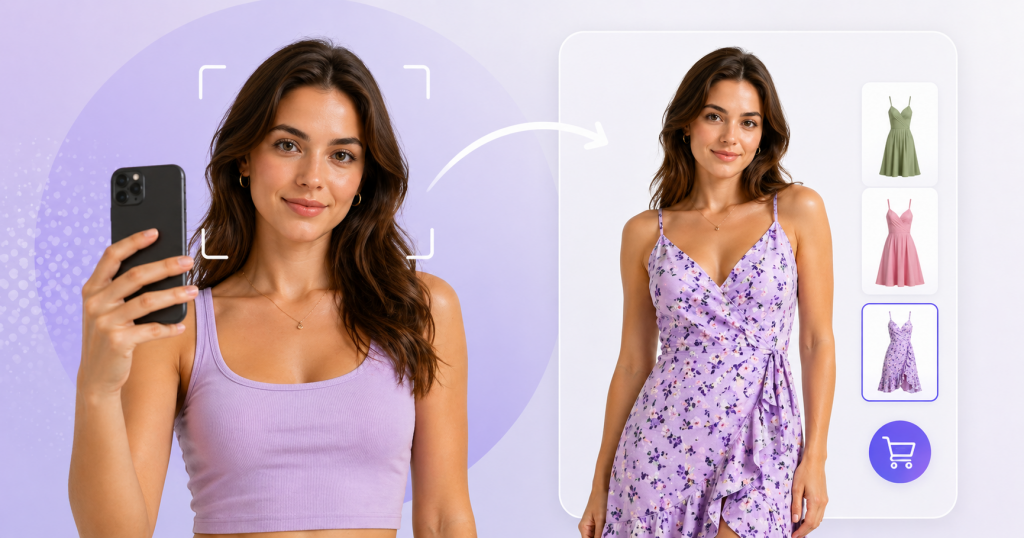
A new wave of artificial intelligence is reshaping how consumers shop online, with virtual try-on technology emerging as one of the fastest-growing tools in e-commerce.
Once considered a novelty, virtual try-on is now being adopted by brands looking to tackle one of online retail’s biggest problems: uncertainty. Shoppers browsing clothing online often rely on static images, leading to mismatched expectations, abandoned carts, and costly returns.
According to industry data, a significant portion of returns—particularly in fashion—are driven by poor fit or inaccurate expectations. Virtual try-on aims to eliminate that gap by letting customers see products on themselves before purchasing.
From Guesswork to Precision Shopping
At its core, virtual try-on uses AI, computer vision, and augmented reality to overlay products onto a user’s image or live camera feed. The result is a realistic preview that mirrors the in-store fitting experience—without the physical store.
Newer platforms are pushing this even further.
Solutions like VirtualTryItOn allow users to upload a simple selfie and instantly see how clothing from virtually any online store would look on their body. The system analyzes body shape, garment structure, and fabric behavior to generate highly realistic outputs in seconds.
For retailers, the appeal is obvious: shoppers who can visualize products more clearly are significantly more likely to convert—and less likely to return items.
Conversion Gains and Return Reduction
Early benchmarks across the sector suggest that virtual try-on is not just a UX upgrade—it’s a revenue driver.
- Conversion rates can increase by 15–40% when shoppers interact with try-on tools
- Some implementations report up to 30% fewer returns
- Customers are more confident in their purchases, leading to higher average order values
This shift is particularly important in fashion e-commerce, where return rates have historically been among the highest of any category.
Seamless Integration Becomes a Competitive Edge
Unlike earlier AR experiments that required complex development, modern solutions are designed for speed and simplicity.
Platforms like Virtual Try It On offer lightweight integrations—often just a small script or widget embedded directly into product pages. This allows brands to deploy virtual fitting rooms without rebuilding their websites.
The result is a frictionless experience: customers can try products instantly, stay on-site longer, and move from browsing to purchasing with fewer doubts.
Beyond Fashion: A Broader Shift in Online Shopping
While clothing remains the primary use case, virtual try-on is expanding rapidly into categories like:
- Beauty (makeup and skincare previews)
- Accessories (glasses, watches, jewellery)
- Home decor and furniture visualization
Industry analysts see this as part of a wider move toward interactive, immersive commerce, where static product pages are replaced by personalized, real-time experiences.
The Bigger Picture
E-commerce has long struggled with a fundamental limitation: customers can’t physically interact with products. Virtual try-on doesn’t just patch that problem—it redefines the entire buying journey.
For businesses, the takeaway is becoming clear:
Brands that continue relying solely on traditional product images may find themselves at a disadvantage, while those adopting AI-powered try-on tools are positioning for higher conversions, lower returns, and stronger customer trust.
As platforms like Virtual Try It On – See it On continue to improve realism and accessibility, the question is no longer if virtual try-on will become standard in e-commerce—but how quickly businesses will adapt.
Bottom line: The fitting room is no longer in-store. It’s now embedded directly into the product page—and it’s changing how people buy.